Neoprene Seat Covers vs Canvas: Which Lasts Longer?
Canvas is often more durable than neoprene for heavy daily use because it tends to handle rubbing and repeated sliding better. Neoprene may be a better choice when wet gear, pets, or spills matter more than long-term abrasion. Choose the wrong material and you get split seams, dirty foam, faded surfaces, and covers that no longer sit tight. This guide compares neoprene and canvas by abrasion, UV, wet use, and entry-and-exit wear so you can choose the longer-lasting material for your driving conditions.
| Factor | Neoprene seat covers | canvas | Winner |
|---|---|---|---|
| Abrasion and daily entry | Soft, cushioned, and snug, but repeated sliding can stress seams and edge binding over time. | Woven surface handles rubbing and repeated entry-and-exit better. | canvas |
| Wet gear and spills | Waterproof or highly water-resistant, so it blocks short-term soak-through better. | Water resistant, not inherently waterproof, so repeated wet loads can saturate it. | Neoprene seat covers |
| Heat and UV exposure | Can hold heat in summer and crack with prolonged sun exposure. | More breathable and often UV-stable, with better sun tolerance in hot climates. | canvas |
| Cleaning burden | Usually wipes clean or hoses down easily, but trapped moisture can need drying time. | Spot cleaning and washing are common, but fabric can hold grime after muddy use. | Neoprene seat covers |
| Fit stability | Often described as glove-like when custom fit, with good seat wrap. | Often depends more on straps and tighter attachment to stay put. | Neoprene seat covers |
Abrasion, moisture, and sun exposure differences
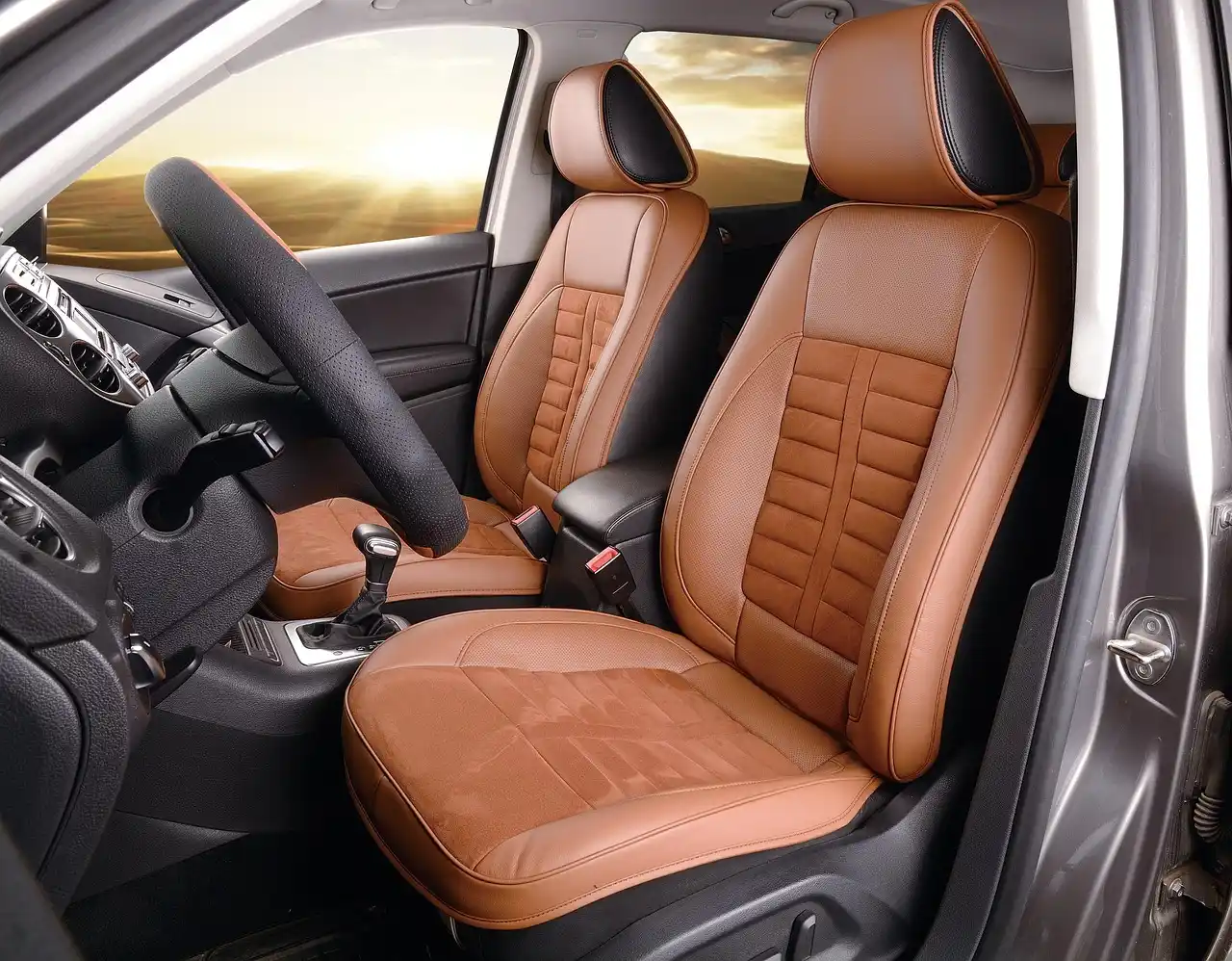
For long service under dry, high-rub use, canvas usually holds up better. For repeated wet use, neoprene usually lasts longer because it blocks water instead of soaking it up. The answer changes with climate, entry-and-exit wear, and how often the seats see wet clothing, cargo, or pets.
Abrasion and seam wear
Canvas has the edge when a seat sees constant sliding, sharp belt buckles, work pants, and tools dragged across the surface. DriveQuest lists canvas as the “Most Durable” option and describes it as a strong blend of polyester and cotton, which fits the material’s abrasion-focused role.
Neoprene can be tough at first, but its softer feel can hide wear until seams, piping, or attachment points start to loosen. In a truck used by multiple drivers, that edge wear shows up faster if the cover shifts every time someone climbs in.
Water exposure and drying
Neoprene is the better pick when seats face repeated wet clothing, rain gear, snow melt, or beach spray. The same source says neoprene is waterproof, while The Wetseat calls it “highly water-resistant,” which still puts it ahead of canvas for short-term wet exposure and spill control.
Canvas is water resistant rather than truly waterproof in common product listings. That means it can shrug off light moisture, but repeated wet gear can soak into the fabric, slow drying, and leave the cover heavier, dirtier, and more likely to smell or mildew if it stays damp.
Heat and UV exposure
Canvas usually ages better in hot sun because it breathes more and is less likely to hold heat against the seat. Canvas may be a better fit when breathability matters more, and it is commonly described as resistant to water, mildew, and UV exposure.
Neoprene is the one to question in sun-baked cabins. The same source says it can crack with prolonged sun exposure, so a parking lot car in Arizona or southern Texas is a harsher home for neoprene than for canvas, especially if the seat cover is thin and the truck sits exposed all day.
Cleaning and maintenance burden
Neoprene is usually easier to rinse or wipe after a muddy workout, wet dog, or spilled drink. That lower cleanup burden is one reason it stays popular in active-use cabins, even if it asks for more attention to drying and sun protection.
Canvas often needs more scrubbing because dirt can settle into the weave. Spot cleaning helps for dust and crumbs, but repeated mud or pet hair can take more effort to keep the cover from looking worn long before the fabric actually fails.
Fit stability and installation
Fit matters because movement drives wear. A custom-fit cover that stays tight lasts longer than a loose one that wrinkles, rubs, and shifts on every entry.
The same source says neoprene covers are sometimes described as glove-like, and that canvas often requires straps. Those details point to a simple pattern: neoprene usually benefits more from precise patterning, while canvas often leans on straps and ties to keep it planted.
What neoprene seat covers
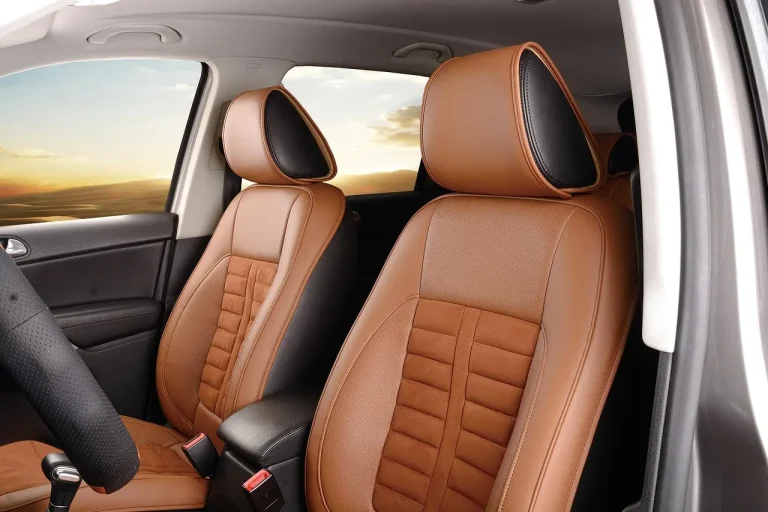
Neoprene seat covers use closed-cell synthetic rubber. That structure gives them the soft, cushioned feel people expect, plus strong water resistance and a snug wrap when the pattern is made well. The tradeoff is heat retention and a higher price tier than many canvas options.
Closed-cell construction
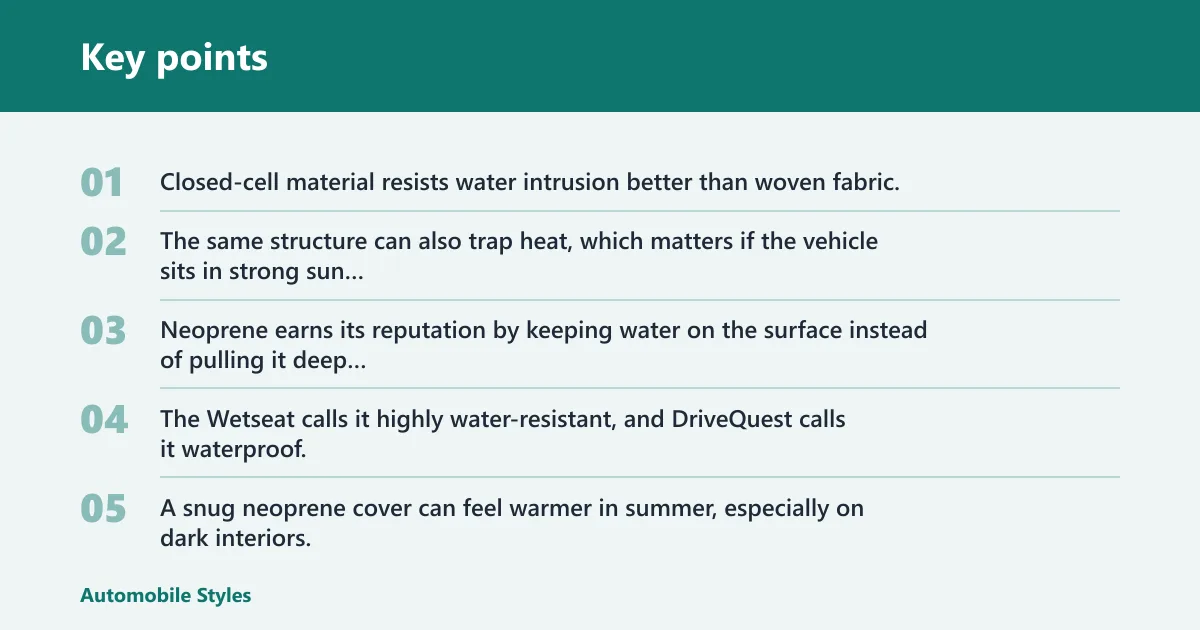
Closed-cell material resists water intrusion better than woven fabric, which is why neoprene is often chosen for wet gear and spill-heavy use. The same structure can also trap heat, which matters if the vehicle sits in strong sun or if the climate stays hot for much of the year.
Water resistance and comfort
Neoprene earns its reputation by keeping water on the surface instead of pulling it deep into the cover. The Wetseat calls it highly water-resistant, and DriveQuest calls it waterproof, so the practical takeaway is simple: it is the safer choice for short-term wet exposure than canvas.
That comfort comes with a cost. A snug neoprene cover can feel warmer in summer, especially on dark interiors, and a poorly ventilated cabin will make that more noticeable than the material’s cushion does.
Where neoprene tends to fail first
Neoprene’s weak spot is not abrasion first. It is prolonged heat and ultraviolet exposure, followed by seam stress if the cover keeps moving. When the material dries hard or starts cracking, the damage often shows up at folds and edges before the middle panel fails.
What canvas seat covers
Canvas seat covers often use a woven polyester/cotton blend. That structure gives them a rugged look, better breathability, and strong resistance to rubbing, but only water resistance rather than true waterproofing in most product specs.
Woven construction
Woven fabric tends to handle abrasion better than softer closed-cell covers because the surface can take repeated friction without the same heat-related aging. DriveQuest’s “strong blend of polyester and cotton” language fits that use case, especially in work trucks and daily commuters that see constant seat entry.
Breathability and abrasion resistance
Canvas gets an edge in hot weather because it breathes more easily. Alibaba’s guide says canvas may be better when breathability matters more, and that matters for commuters who leave the vehicle parked in the sun or for drivers who spend long hours in the seat.
Where canvas tends to fail first
Canvas usually loses ground in repeated wet use. If the cover is soaked often, it can stay damp longer, collect grime faster, and feel heavier after rain or snow gear comes inside. That is a wear pattern, not a style issue.
A common first-time mistake is buying canvas for beach duty because it sounds tough, then leaving saltwater towels and wet sandals on it every weekend. The fabric may survive, but the cleaning burden and drying time rise fast.
Which material lasts longer in daily use?
Canvas usually lasts longer in daily commuting and repeated seat entry because it resists abrasion better. Neoprene can last a long time too, but its strength shows most clearly in wet use, not in constant rubbing from people climbing in and out every day.
Daily commuting and entry-and-exit stress
If one driver gets in and out many times a day, the side bolster and seat edge take the hit. Canvas handles that friction better, while neoprene is more likely to show seam fatigue or loose edges if the fit is only average.
Work-truck abuse and heavy wear
For trades, fleet vehicles, and utility trucks, canvas is usually the safer long-life bet unless the seats also see frequent wet gear. Tools, grit, heavy clothing, and constant in-and-out traffic favor abrasion resistance over softness.
Pet claws and cargo abrasion
Canvas also tends to do better under pet claws and cargo scuffs. Neoprene can resist a lot, but claws can nick softer surfaces and rough cargo can wear through a cover faster when the vehicle is used like a haul space.
Seat cover decision matrix
This matrix scores each material by real use condition, then ties that choice to the most likely failure mode and maintenance burden. Use it to match the cover to the abuse pattern, not just the vehicle type.
| Condition | Neoprene seat covers | canvas | Recommended pick | Likely failure mode | Maintenance burden |
|---|---|---|---|---|---|
| Wet gear | Scores 5/5 for water control; best when jackets, waders, or swim gear go on the seat. | Scores 2/5 because moisture can soak the weave and linger. | Neoprene seat covers | Canvas saturates and dries slowly. | Low-to-moderate; wipe or hose, then dry thoroughly. |
| Pet claws | Scores 3/5; good against moisture but less forgiving under repeated claw contact. | Scores 4/5; better abrasion tolerance for paws, nails, and crate edges. | canvas | Neoprene edges and seams wear first. | Moderate; vacuum hair and spot clean. |
| Hot-sun exposure | Scores 2/5 because heat retention and cracking risk rise with prolonged sun. | Scores 4/5 because breathability and UV stability are stronger fits. | canvas | Neoprene cracks or hardens faster in sun. | Low-to-moderate; keep it clean and dry. |
| Daily commuting | Scores 3/5 unless wet use is common. | It is often rated highly because repeated entry-and-exit tends to favor abrasion resistance. | canvas | Neoprene seam stress from repeated sliding. | Moderate; brush, vacuum, and spot clean regularly. |
| Work-truck abuse | Scores 3/5 for occasional wet gear, not for constant abrasion. | Scores 5/5 for grit, tools, and repeated use. | canvas | Neoprene loses shape or wear appears at high-friction points. | Moderate-to-high; frequent cleaning keeps the weave from loading up with dirt. |
Wet gear and beach trips
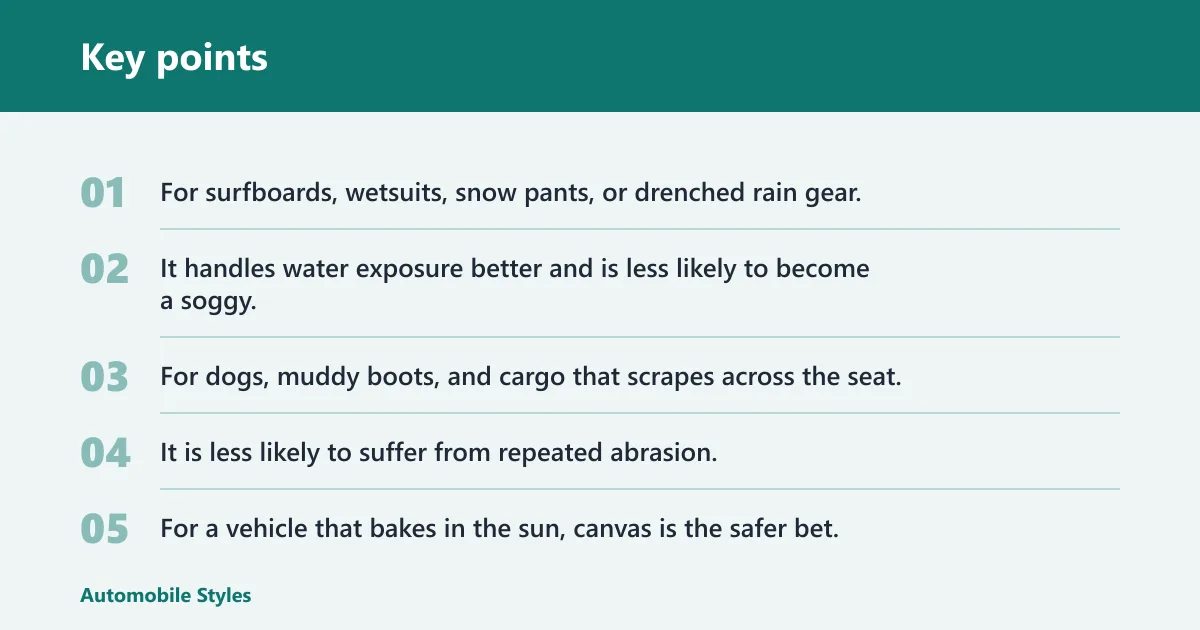
For surfboards, wetsuits, snow pants, or drenched rain gear, neoprene is the better long-term material. It handles water exposure better and is less likely to become a soggy, heavy fabric after repeated use.
Pets and muddy loads
For dogs, muddy boots, and cargo that scrapes across the seat, canvas is the more durable call. It is less likely to suffer from repeated abrasion, and its dryness advantage matters when the cargo is dirty rather than soaked.
Hot-sun exposure
For a vehicle that bakes in the sun, canvas is the safer bet. Neoprene can get too hot in summer, and prolonged UV exposure increases the risk of cracking and surface wear.
Daily commuting
For a commuter car with normal clothes, repeated entry, and little wet gear, canvas usually wins. The material’s abrasion resistance matters more here than waterproofing, and the cover is less likely to feel hot after sitting in the sun.
Work-truck abuse
For a truck that sees tools, grit, and heavy use, canvas is still the stronger default unless wet exposure is the main problem. A custom-fit canvas cover with solid attachment points usually outlasts a softer option that moves around under load.
How do fit and backing change durability?
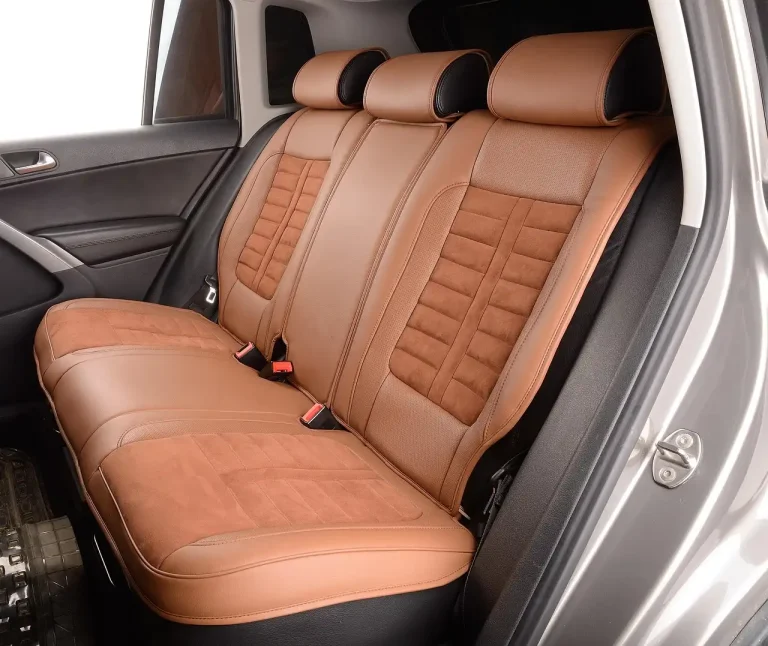
Fit changes lifespan because a loose cover wears at the edges first. A tight, well-anchored cover keeps friction off the seams and reduces the chance that the material folds, shifts, or creases in the same place every day.
Custom, semi-custom, and universal fit
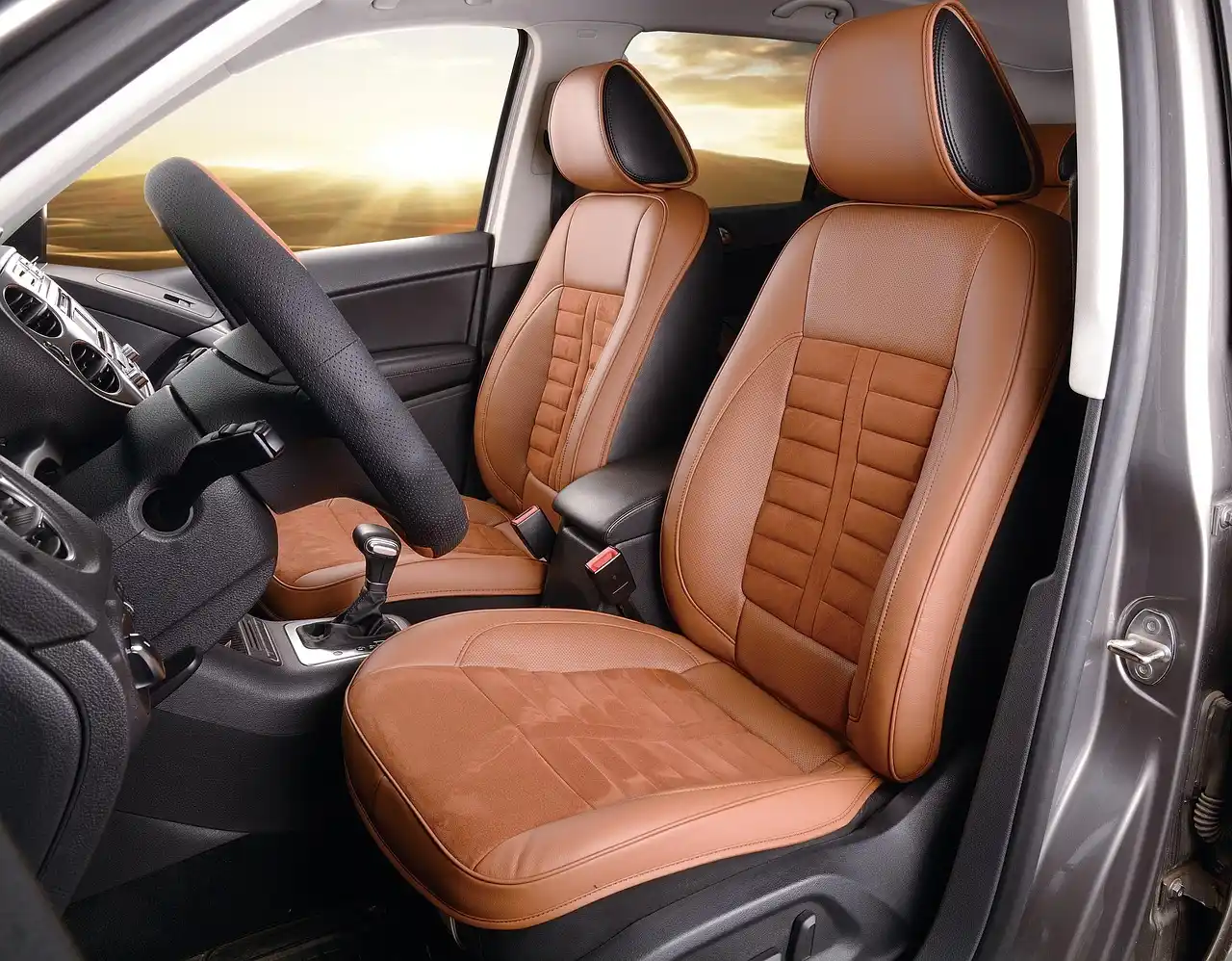
Custom fit is the best choice when you want the longest practical service life. Semi-custom can work well if the vehicle is common and the seats are close to a standard shape. Universal fit is the riskiest option because extra slack often turns into movement, wrinkling, and faster seam wear.
Rubber backing, straps, and ties
Backing and attachment methods matter as much as fabric choice. Rubber backing and a non-slip grip help reduce movement, while straps and ties keep the cover anchored when the seat gets used hard. The same source notes that canvas often requires straps, which means the installation quality matters a lot.
Movement reduction and seam stress
The less the cover slides, the longer it tends to last. Movement concentrates stress at corners, under-seat anchors, and stitched seams, so a good fit can make a mid-tier material last longer than a poor fit on a technically tougher one.
Choose Neoprene seat covers if… / Choose canvas if…
Choose Neoprene seat covers if wet gear, spills, snow melt, or beach use are the main threats. Choose canvas if abrasion, daily entry, work use, pets, and sun exposure are the bigger problems. Neither material is the best answer for every cabin, and fit quality still matters.
Best-fit scenarios for Neoprene seat covers
Pick Neoprene seat covers for surf trips, rainy commutes with soaked outerwear, snow season, or families that need fast cleanup after spills. They also make sense when you want a snug, glove-like fit and are willing to trade some summer heat tolerance for water protection.
Best-fit scenarios for canvas
Pick canvas for work vehicles, pet transport, dry climates, and drivers who slide in and out often. It is the better long-life choice when abrasion and UV exposure matter more than waterproofing, and it usually brings a lower cost tier than neoprene.
Cases where neither is the right buy
If the vehicle sits in brutal sun and also sees heavy wet use, neither basic material is perfect. In that case, prioritize custom fit, strong attachment points, and a material spec that matches the worst condition instead of the average one.
Frequently asked questions
Are neoprene seat covers better than canvas?
Neoprene is better when water protection matters most. Canvas is better when abrasion, daily entry, and sun exposure matter more. The better material depends on the main wear mode, not on a broad idea of ruggedness.
Which seat cover material is more durable, neoprene or canvas?
Canvas is usually more durable overall for dry daily wear because it resists abrasion and repeated sliding better. Neoprene can outlast canvas in wet use, but it is more vulnerable to heat stress and prolonged sun exposure.
Do neoprene seat covers get too hot in summer?
They can. Neoprene holds heat more than canvas, especially in a parked vehicle with dark upholstery and strong sun. If your cabin gets very hot, canvas usually stays more comfortable and ages better there.
Are canvas seat covers waterproof or just water resistant?
Most canvas seat covers are water resistant, not truly waterproof. That is enough for light moisture and occasional spills, but repeated wet gear can saturate the fabric and make drying slower than with neoprene.
Which seat covers are better for pets and work vehicles?
Canvas is usually the better choice for pets and work vehicles because it handles abrasion better. Pet claws, muddy boots, tool belts, and repeated climbing in and out favor a woven cover more than a softer water-blocking one.
Which material is easier to clean, neoprene or canvas?
Neoprene is usually easier to wipe or hose down after a spill or wet mess. Canvas can be cleaned too, but dirt often sits in the weave and may need more brushing, vacuuming, or spot treatment.
Should I buy custom-fit neoprene or canvas seat covers?
Yes, if you want the longest service life. Custom fit reduces movement, which lowers seam wear and keeps both materials from shifting out of shape. That matters most if you expect daily use or rough entry-and-exit cycles.