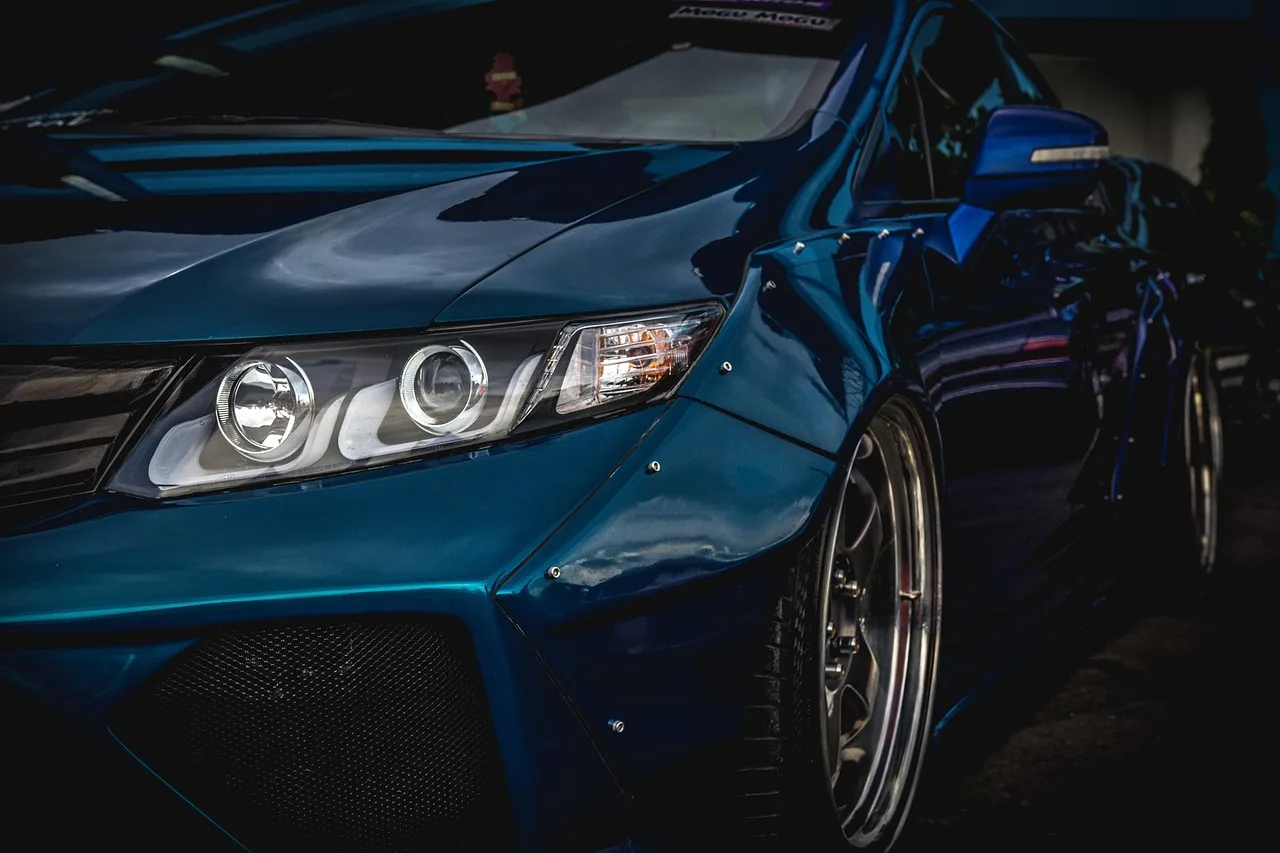
Do body kits fit without body modifications?
Reviewed for fitment and installation clarity
Sometimes, yes. A body kit may fit with no body modifications only when it is a true bolt-on kit for the exact year, trim, bumper type, and drivetrain, and many kits still need trimming, drilling, or sanding. Skip the fitment details, and you can end up with panel gaps, cracked fiberglass, mounting stress, rust from drilled holes, and return or repaint costs. This guide shows how to separate bolt-on fitment from normal install work and when “no modifications” is a warning sign instead of a selling point.
Quick decision: if the listing does not name your exact year, trim, bumper type, and drivetrain, do not assume no-mod fitment. If it does, dry-fit before paint, confirm whether the part uses factory holes or clips, and verify whether the material is fiberglass, urethane, ABS, or carbon fiber.
Definitions: bolt-on means the part is designed to use factory-style mounting points with little or no trimming; no-drill means no new holes in the body shell, though clips, brackets, adhesive, or factory holes may still be used; minor trim means small edge cleanup, sanding, or light trimming is expected; custom-fit only means the part may require reshaping, repeated mock-up, filler, or professional finish work before paint.
One-screen yes/no flowchart:
Do you have the exact year/trim/bumper/drivetrain? No → expect fitment work.
Does the seller specify factory mounting points and exact application? No → treat “bolt-on” as unverified.
Are you okay with dry fitting, minor trimming, or drilling non-structural holes? No → buy only a verified no-mod kit or skip it.
Is the part fiberglass or a custom mold? Yes → expect prep work and possible professional install.
If you answered yes to the first two and yes to the last willingness check, proceed to order.
When modification goes beyond normal installation
Sometimes they do, but that is the exception. A body kit may fit without cutting or shaping the car only when the listing matches your exact vehicle and the parts are molded for that application. Many kits still need normal install work such as dry fitting, alignment checks, and drilling new mounting holes where the kit requires them.
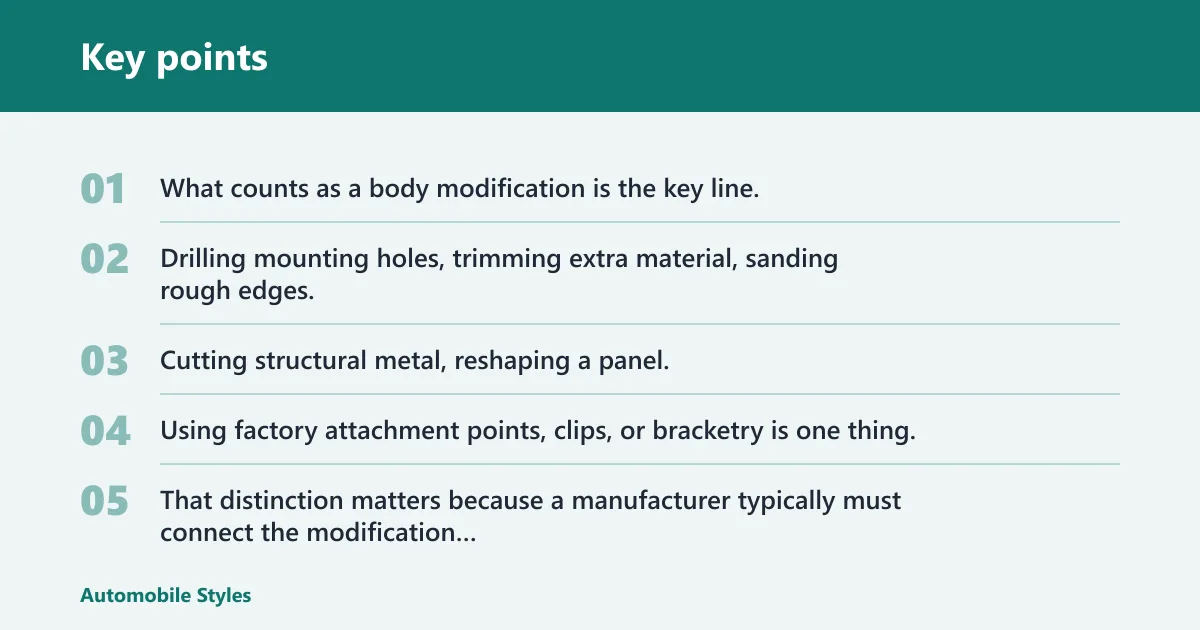
What counts as a body modification is the key line. Drilling mounting holes, trimming extra material, sanding rough edges, and using filler during prep are common installation steps. Cutting structural metal, reshaping a panel, or forcing misaligned parts to close a gap is a different matter.
Using factory attachment points, clips, or bracketry is one thing; changing body structure or panel geometry is another. That distinction matters because a manufacturer typically must connect the modification to the claim before denying coverage on that basis.
Body kit fitment types
Body kits are aftermarket exterior parts that can include a front bumper, rear bumper, side skirts, spoiler, or hood. Fitment varies by vehicle, kit quality, and material. The same kit name can fit one trim cleanly and need repeated adjustment on another because bumper shape, sensor openings, and lower-valance profiles are not identical.
Model-platform examples are where this matters most. A bumper cover for a base sedan often will not interchange with an RS/GT/ST-style bumper because fog-light bezels, grille openings, air-curtain cutouts, and lower valance profiles differ. On trucks and SUVs, the same issue shows up across 2WD versus 4WD, sensor-equipped versus non-sensor trims, and tow-package versus non-tow-package fascias. Use the exact platform code and bumper code, not just the marketing trim name.
Bolt-on fitment
Bolt-on means the kit is meant to attach with the vehicle’s existing attachment points and hardware pattern, with little or no trimming. Even then, a true bolt-on part can still need dry fitting before paint. If the seller cannot identify the exact chassis, trim, and bumper type, “bolt-on” is not enough information.
No-drill claims
No-drill sounds simple, but it often means the seller expects use of factory holes, clips, adhesive, or existing fasteners instead of making new holes. That does not guarantee perfect alignment. It also does not rule out sanding or trimming, especially at the wheel arch, lower edge, or side skirt ends.
Minor trim and adjustment
Minor trim usually means you are expected to remove small amounts of extra material so the panel sits flush. This is common on fiberglass body kits and still possible on urethane, ABS, and carbon fiber parts. The goal is a clean fit, not a redesign of the vehicle body.
Custom-fit only
Custom-fit only means the part may arrive close, but not ready to install as-is. Panels may need reshaping, edge cleanup, filler, or repeated mock-up work before final paint. For custom fiberglass or urethane body work, professional installation is often the safer choice.
Fitment decision matrix
Use this table before you buy. It separates marketing language from what usually happens in the bay or driveway, and it tells you what to ask before money changes hands.
| Kit claim | What it usually means in practice | Exact questions to ask the seller before buying |
|---|---|---|
| Bolt-on | Meant to use factory mounting points with little or no trimming. Dry fitting is still wise before paint. | Does this fit my exact year, trim, bumper type, and drivetrain? Which mounting points are used? Are any holes already molded or marked? |
| No-drill | Usually means no new holes in the body shell, but it may still need clip, bracket, or adhesive setup. | Does “no-drill” mean no new holes at all, or only no holes in sheet metal? Are factory holes required? Does the kit still need trimming or sanding? |
| Minor trim | Expect small amounts of trimming, edge cleanup, or sanding for flush fitment. | Where is trimming usually needed? How much material is normally removed? Is test-fit required before paint? Are filler or edge repairs sometimes needed? |
| Custom-fit only | Panels are not ready for a quick install and may need repeated alignment, filler, and finish work. | What prep work is required before paint? Is this a universal or model-specific mold? Should a professional installer handle it? What return policy applies after dry fit? |
Warning signs of poor fitment
- The listing avoids the exact year, trim, bumper style, or drivetrain.
- Photos show large, uneven gaps at the hood, bumper, or wheel arch.
- The seller uses phrases like “may need work” without naming the work.
- Edge lines look warped, wavy, or not symmetrical from side to side.
- The kit is sold as universal but also described as plug-and-play.
- Mounting points do not line up during the first dry fit.
- Panels flex enough that the fit changes as soon as you touch the corners.
Which materials need the most work?
Material matters because it changes how forgiving the part is during fitment. Fiberglass usually needs the most prep. Urethane is more flexible and often better for daily driving, though fit is not guaranteed to be perfect. ABS is a common middle-ground material. Carbon fiber is premium, yet fitment still depends on exact model match and mold quality.
Across collision-repair and accessory fitment notes, the pattern is consistent: rigid composite parts often need more surface correction, while flexible materials can tolerate minor deflection but still need correct geometry. In practice, the better the mold and the closer the application match, the less corrective work you should expect.
Fiberglass body kits
Fiberglass body kit parts are the most likely to need sanding, filler, trimming, and edge cleanup. They can be lower cost, but they are less forgiving than urethane or ABS. Small mold errors can turn into visible gaps or finish issues if you skip dry fitting.
Urethane body kits
Urethane body kits are usually more flexible, which helps on daily-driven cars that see temperature swings and road vibration. That does not mean they are always perfect. If the mold is off, you can still see misalignment, pulled mounting points, or an edge that will not sit flush without adjustment.
ABS body kits
ABS body kits are common because they offer a practical balance of cost and durability. Fitment quality still depends on the manufacturer and the exact vehicle application. A well-made ABS kit may need only light prep, while a generic one can still demand trimming or extra bracket work.
Carbon fiber body kits
Carbon fiber body kits are usually the premium option, with a higher price and a cleaner finish out of the box. That said, premium material does not guarantee perfect fit. If the part is made for the wrong bumper or trim, the weave can look good while the panel still sits wrong.
What install work is normal?
Normal install work includes dry fitting, small alignment corrections, and the prep that makes a panel sit correctly before paint. That often means drilling new mounting holes, trimming excess material, sanding rough edges, or using filler on uneven areas. These steps are common on many kits and are not the same as major body modification.
Reputable aftermarket install manuals and dealer accessory guides usually expect a sequence like: verify application, test-fit, adjust, then finish. That sequence is the safe way to avoid painting a part that never sat right in the first place.
Dry fitting before paint
Dry fitting means a pre-install test fit before final attachment. It is essential before paint or final mounting. You are checking gap size, clip location, bumper corners, and whether each panel lands where it should. If the part does not line up in dry fit, paint should wait.
Drilling mounting holes
Drilling mounting holes is common on many kits for secure attachment, especially side skirts and bumpers. The holes may go through existing brackets, inner liners, or other non-structural areas. On some cars, drilled holes can affect warranty treatment, so ask before you drill.
For warranty context, a manufacturer or dealer should not deny unrelated warranty coverage simply because an aftermarket part is present. The practical issue is whether the part or install caused the problem. A dealer may still scrutinize drilled holes, broken clips, altered panels, or corrosion around new fasteners if those are tied to the claim. Keep installation photos and receipts.
Trimming, sanding, and filler
A little edge cleanup is normal. A part that needs constant reshaping, though, is a different case and may be a poor match for the car.
Say your rear bumper sits 8 mm low at one corner during dry fit and the hatch opening is even on the other side. That points to a fitment issue with the part, not the paint shop. If the gap stays after repositioning the clips and checking the brackets, do not move to final mounting.
Panel alignment and edge cleanup
Panel alignment matters because even a strong fastening point cannot hide a warped edge. Look for flush contact along the fender line, even spacing around lamps, and a clean transition at the lower seam. If the panel must be forced into position, stress cracks can show up later.
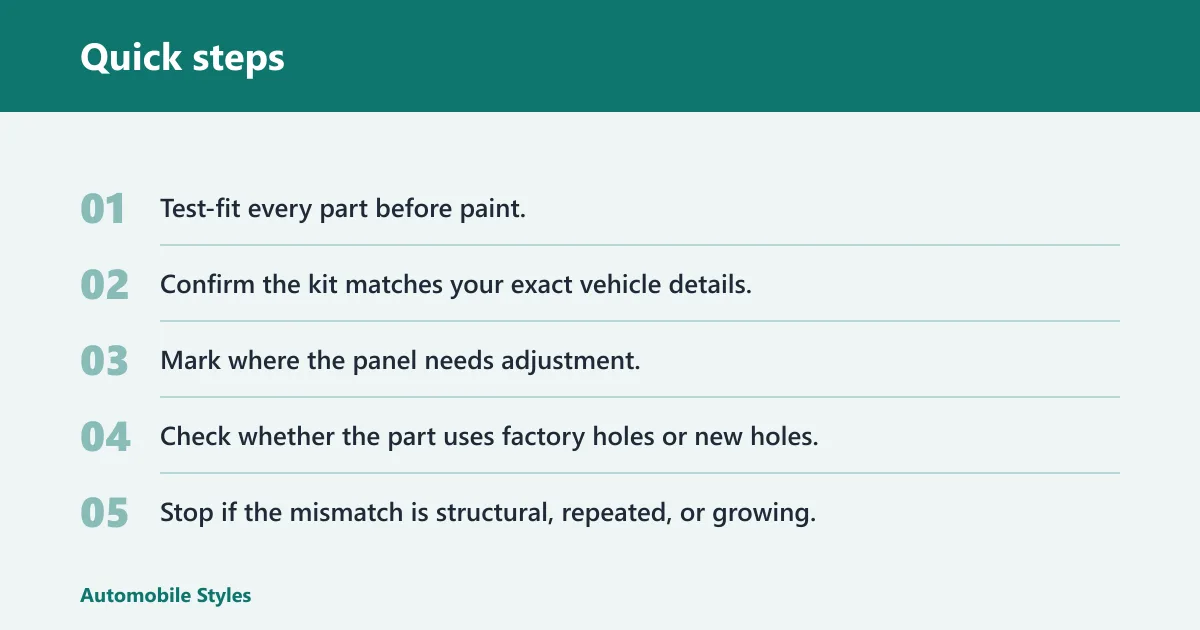
- Test-fit every part before paint.
- Confirm the kit matches your exact vehicle details.
- Mark where the panel needs adjustment.
- Check whether the part uses factory holes or new holes.
- Stop if the mismatch is structural, repeated, or growing.
Will a body kit affect your warranty?
Warranty rules vary by manufacturer and region, so there is no single answer. A body kit with interchangeable parts and no major modifications may be less likely to raise coverage questions, while paint changes may also matter with some makers. The practical difference is simple: cosmetic install work is usually less risky than structural changes, but you should still ask the maker and the dealer.
Under Magnuson-Moss context, the burden generally falls on the warrantor to connect the modification to the failure being claimed. That does not mean every aftermarket body kit is risk-free. It means a dealer should not automatically deny a suspension, engine, or unrelated electronics claim just because you installed a bumper cover or spoiler. The closer the install stays to factory-style mounting, the easier it is to defend.
Why warranty rules vary
Some manufacturers care only if a part causes damage or changes the car beyond normal accessory installation. Others are stricter about drilling, repainting, or using non-original panels. If a kit needs only removable hardware and factory-style attachment points, it is easier to defend than a part that requires cutting metal or reshaping a body panel.
In practice, that means a dealer or body shop will usually view a clip-in accessory differently from a part that requires sectioning, reinforcement, or metal reshaping.
What to ask the dealer
Ask whether drilled holes, bracket changes, or repainting would affect coverage on the specific system you are modifying. Get a direct answer for body panels, corrosion coverage, and paint-related claims. If the dealer cannot answer clearly, document the question and keep the response with your purchase records.
When cosmetic work is less risky
Cosmetic work is usually less risky when the part is interchangeable, uses factory mounting points, and does not alter structure. A spoiler, side skirt, or bumper cover that installs with normal hardware is a different case from a panel that needs cutting or reinforcement. Ask before assuming any result.
When should you use a professional installer?
Use a professional installer when the kit is fiberglass, when the urethane part needs repeated alignment, or when the edges and gaps are not settling cleanly. A professional can reduce visible mismatch after install and handle finish work without turning small alignment problems into damaged panels. That is especially useful on custom fiberglass or urethane work.
A shop also helps when the platform has tight tolerances, parking sensors, adaptive cruise modules, or layered bumper components. On late-model trucks and SUVs, a millimeter mistake around a sensor pocket can become a warning light or a bumper that looks “off” even after paint.
Fiberglass and urethane work
That advice makes sense because these materials can need sanding, filler, and precise edge finishing. A shop also has the tools to correct small dimensional errors without chasing them for hours.
When panels do not line up
Stop and hand the job off when the panel fights the mount points, the gaps change from one side to the other, or the bumper corner will not stay seated. A kit that needs pressure to sit in place often points to a poor mold or the wrong application.
When paint prep is not clean
If the surface still shows waves, rough seams, or obvious pinholes after prep, do not paint yet. Paint will not hide fitment mistakes. It can lock them in. Clean prep is the last check before final color, not a substitute for alignment.
Suppose a side skirt needs a small trim at one end, but the second dry fit shows the gap getting wider after each adjustment. That is the point to stop. Forced installs usually end with cracked material, lifted clips, or paint damage that costs more than the kit.
How do I know if a body kit is truly bolt-on?
A body kit is truly bolt-on only when the seller can match it to your exact vehicle and explain how it attaches without body cutting or reshaping. Look for factory-style mounting points, clear trim compatibility, and a part description that names the exact bumper type, not just the model name.
For fitment verification, good sellers and dealer accessory departments will usually cite the exact chassis or platform, the bumper variant, and whether sensors, fog lights, tow hooks, or aero trims change the part number. If those details are missing, treat the claim as incomplete.
A true bolt-on kit should still be dry-fit before paint. The part may attach without major body work, but that does not mean it will land perfectly on the first try. If the seller cannot answer exact fitment questions, assume some adjustment will be needed.
Frequently asked questions
Do body kits fit without body modifications?
Sometimes, but only on a true bolt-on kit made for your exact vehicle details. Many kits still need dry fitting, drilling new mounting holes, trimming, or sanding. If the listing is vague about year, trim, bumper type, or drivetrain, assume normal install work may be required.
Does it fit without vehicle modification?
It may, if the kit uses factory mounting points and does not require new holes, cutting, or reshaping. That said, “no vehicle modification” can still hide prep work such as edge cleanup or bracket adjustment. Ask the seller exactly what installation steps are expected before you buy.
Does this kit fit my specific model?
Check the exact year, trim, bumper style, and drivetrain, not just the badge on the trunk. A kit that fits one version of the car may miss sensor openings or lower-body contours on another. Ask for the fitment range in writing before ordering.
How much trimming or drilling is normal for a body kit?
Small trimming, sanding, and drilling mounting holes are normal on many kits, especially side skirts and bumpers. The key is whether the work stays within normal installation. If you need repeated cutting, filler, or force to line up the panel, the kit may be the wrong one.
Will a body kit void my warranty if it needs modifications?
Not always. Warranty treatment varies by manufacturer, region, and dealer policy. Interchangeable parts and no serious modifications may preserve coverage, while drilling, repainting, or structural changes can raise questions. Ask the dealer before installation, and keep records of what was changed.