How to measure wheel offset with a tape measure
Measure wheel offset by using one consistent width datum throughout: bead-seat width for the wheel width and backspacing measured from the inner wheel edge to the hub-mounting surface. Measure the wheel’s bead-seat width, set a straight edge across the wheel at the inner edge reference, then calculate offset as backspacing minus centerline; ET is in millimeters. If you use bead-seat width, do not mix in outer-lip thickness unless you explicitly add or subtract it first, because that changes the result. Get it wrong, and you can buy wheels that rub, stick out, or miss suspension and brake clearance. This guide shows the tape-measure method, how to keep the reference plane consistent, and a quick checklist before you order wheels. For related fitment basics, see wheel size guide, backspacing guide, bolt pattern guide, hub bore guide, tire rubbing guide, and wheel fitment guide.
What wheel offset means
Wheel offset is the distance from the mounting surface to the wheel centerline, usually stated in millimeters. Positive offset places the mounting surface outward from centerline, zero offset places it on the centerline, and negative offset moves it inward. That number changes where the wheel sits in the fender and how much room remains near brakes, suspension, and bodywork.
Offset, centerline, and mounting surface
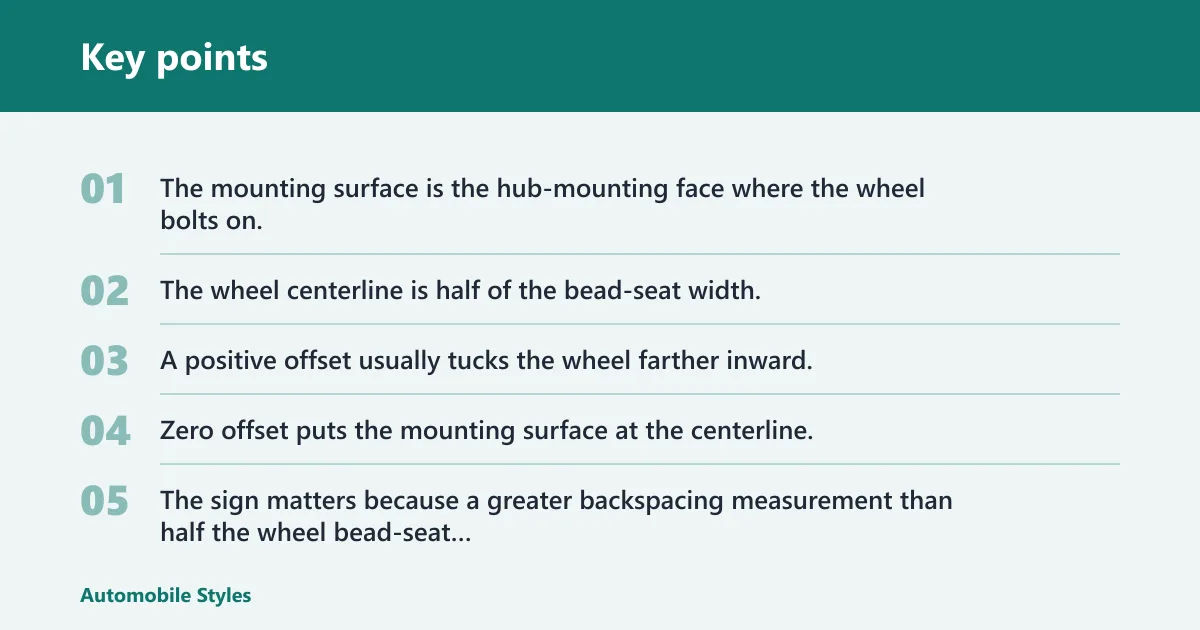
The mounting surface is the hub-mounting face where the wheel bolts on. The wheel centerline is half of the bead-seat width, and offset math must use bead-seat width, not the outer lips.
Positive, zero, and negative offset
A positive offset usually tucks the wheel farther inward. Zero offset puts the mounting surface at the centerline. Negative offset pushes the wheel outward. The sign matters because a greater backspacing measurement than half the wheel bead-seat width points to positive offset, not negative offset. That is the most common place people flip the math.
What you’ll need
- Tape measure
- Straight edge or level
- Notebook, phone notes app, or printed worksheet
- Marker or masking tape for labeling measurements
- Wheel removed from the vehicle, if possible
Wheel offset worksheet
Use this worksheet to compare two wheels before you buy. Keep the measurements in the same units on each line, and note whether the wheel is bare or still mounted with a tire. If the tire is on, mark the result as approximate and recheck once the wheel is bare.
| Measured wheel width | Measured backspacing | Calculated offset | Mistake check | Fitment note |
|---|---|---|---|---|
| 8.0 in | 5.50 in | +12.7 mm | Bead-seat width, no tire, tape square | Pass |
| 9.0 in | 4.25 in | -19.1 mm | Check outer-lip error | Fail |
| Wheel size | Width reference | Half-width / centerline | Backspacing | 25.4 conversion | Final offset sign | Verification |
|---|---|---|---|---|---|---|
| 7.0 in wheel | Bead-seat width | 3.5 in / 88.9 mm | 3.0 in / 76.2 mm | 7.0 × 25.4 = 177.8 mm | -12.7 mm | Backspacing is less than centerline, so offset is negative |
| 8.0 in wheel | Bead-seat width | 4.0 in / 101.6 mm | 4.0 in / 101.6 mm | 8.0 × 25.4 = 203.2 mm | 0 mm | Backspacing equals centerline, so offset is zero |
| 9.0 in wheel | Bead-seat width | 4.5 in / 114.3 mm | 5.0 in / 127.0 mm | 9.0 × 25.4 = 228.6 mm | +12.7 mm | Backspacing is greater than centerline, so offset is positive |
| 10.0 in wheel | Bead-seat width | 5.0 in / 127.0 mm | 5.75 in / 146.1 mm | 10.0 × 25.4 = 254.0 mm | +19.1 mm | Converted values confirm the sign and the centerline comparison |
- Bead-seat vs outer-lip width: confirm the width is measured bead seat to bead seat.
- Tape sag: keep the tape taut so it does not arc downward.
- Angled read: check that the tape crosses square to the straight edge.
- Final fitment note: mark pass if the result matches the target and leaves clearance for brakes, suspension, and body.
How do you measure wheel width correctly?
Measure wheel width from bead seat to bead seat, not outer lip to outer lip. That is the width used in offset math and centerline calculations. If you measure across the lips or across a tire shoulder, the centerline shifts and the final offset will be wrong.
Measure bead seat to bead seat
Lay the wheel flat and find the inner ledges where the tire beads seat. Measure straight across that interior width. This is the number used for centerline, which is half the bead-seat width. Wheel offset can be given in inches or millimeters, and 25.4 is the conversion factor from inches to millimeters.
Avoid outer lip and tire shoulder errors
Outer lips add material that does not belong in the width figure. Tire shoulders add even more error. If a wheel is mounted with a tire, the visible outer diameter is not the wheel width. Mark the wheel itself, not the tire, before you write down a width.
How do you measure backspacing with a tape measure?
Set a straight edge across the wheel, then measure from the mounting surface to the straight edge at the wheel’s inner side. Backspacing is the distance from the inner edge to the mounting surface, and the straight edge must sit on the same reference plane you use for width so the math stays consistent. Keep the tape taut and square to avoid false depth readings.
Set a straight edge across the wheel
Place a level or straight edge across the bead-seat area so it bridges the rim evenly. That gives you a reference plane for the measurement. Do not tilt the tool to reach a lower point, because an angled read changes the measured depth.
Measure from the mounting surface to the inner edge
Measure from the hub-mounting pad to the underside of the straight edge on the inner side of the wheel. That number is backspacing. Half the bead-seat width is 4.0 inches, so the mounting surface sits outward from centerline and the offset is positive.
Keep the tape taut and square
A tape that sags between two points reads longer than it should. Press the hook firmly against the mounting surface, hold the tape straight, and read it at eye level. A common first-timer mistake is to follow the tape from a steep angle and trust the wrong mark.
How do you calculate wheel offset from width and backspacing?
Convert wheel width to millimeters with 25.4, divide by two to get the centerline, then compare that centerline to your backspacing measurement. If backspacing is greater than centerline, offset is positive. If backspacing is smaller, offset is negative. Keep the units straight, or the sign will come out wrong.
Convert wheel width to millimeters with 25.4
First convert the bead-seat width from inches to millimeters. Multiply inches by 25.4. For an 8.0-inch wheel, the bead-seat width is about 203.2 mm and the centerline is about 101.6 mm.
Apply the offset formula and check the sign
Use this formula: offset = backspacing in millimeters minus centerline in millimeters. If your backspacing is 5.50 inches, convert it to 139.7 mm. Subtract about 101.6 mm of centerline from about 139.7 mm of backspacing, and the offset is about +38.1 mm. That matches the rule that more backspacing than centerline means positive offset.
A +35 offset example means the mounting surface is 35 mm outward from centerline. That is the same sign convention used here, which says offset is measured in millimeters from the hub-mounting surface to the wheel’s true centerline.
Quick calculation check
If the math gives you a positive number, the wheel’s mounting surface sits outward from centerline. If the math gives you zero, the mounting surface and centerline line up. If the math gives you a negative number, the mounting surface sits inward from centerline. That sign tells you which way the wheel will move on the car.
Common mistakes to avoid
Most bad DIY offset readings come from the measuring method, not the formula. The wrong width reference, a bowed tape, or a dirty mounting face can create a wheel that looks right on paper and fits badly on the car. Use the checklist before you place an order.
Tape sag and angled reads
Keep the tape straight and the straight edge level. If the tape bows, the backspacing number grows. If the read is angled, the width or depth changes. A tape measure only helps when it is taut and aligned to the same plane from start to finish.
Dirty contact points
Clean rust, brake dust, and stuck debris from the mounting surface before measuring. Dirt on the hub face or wheel pad can shift the reading enough to matter. A small millimeter-level change can affect clearance, so grime is not a trivial error.
Measuring the tire instead of the wheel
A mounted tire hides the true wheel edge and can block the mounting surface from view. If you cannot reach the hub face, note that the result is approximate and verify later with the bare wheel. Say your 18-inch wheel is still on the car. The tire shoulder makes the outer diameter look larger, but that says nothing reliable about offset.
Mixing up backspacing and offset
Backspacing is a depth measurement from the inner wheel edge to the mounting surface. Offset is the centerline relationship in millimeters. They are related, but they are not the same number. Do not use the backspacing figure as offset without converting it through the centerline.
How do you tell if wheel offset is positive or negative?
Compare backspacing to half the bead-seat width. If backspacing is larger than the centerline, the offset is positive. If backspacing is smaller than the centerline, the offset is negative. If they are equal, the offset is zero. That comparison is easier to trust than guessing from wheel stance alone.
Positive offset generally pulls the wheel inward. Negative offset pushes it outward. Zero offset is the middle case. Offset affects fitment, clearance, handling, and stance, but it does not guarantee fitment by itself because brake shape, suspension geometry, and fender clearance still matter.
Frequently asked questions
How is wheel offset measured?
Wheel offset is measured from the hub-mounting surface to the wheel’s true centerline. It is usually listed in millimeters, though some wheel references also show inches. The number is positive, zero, or negative depending on where the mounting face sits relative to centerline.
How do I measure backspacing on a wheel?
Lay a straight edge across the wheel bead seats, then measure from the mounting surface to the underside of the straight edge at the inner edge of the wheel. Keep the tape taut. Do not measure from the tire sidewall, because that changes the result.
Can I measure wheel offset with the tire?
You can get an approximate reading, but the tire makes the wheel edges harder to reference and can block the mounting surface. A mounted tire can hide the true wheel width and introduce angled tape errors. For a buying decision, verify the wheel bare if possible.
To compare two wheels, record the measured width, backspacing, and calculated offset on the same sheet. Then add a pass or fail note for clearance concerns. Check the vehicle’s factory specifications and the wheel maker’s fitment notes before you decide, because offset, bolt pattern, and hub bore all work together rather than in isolation.